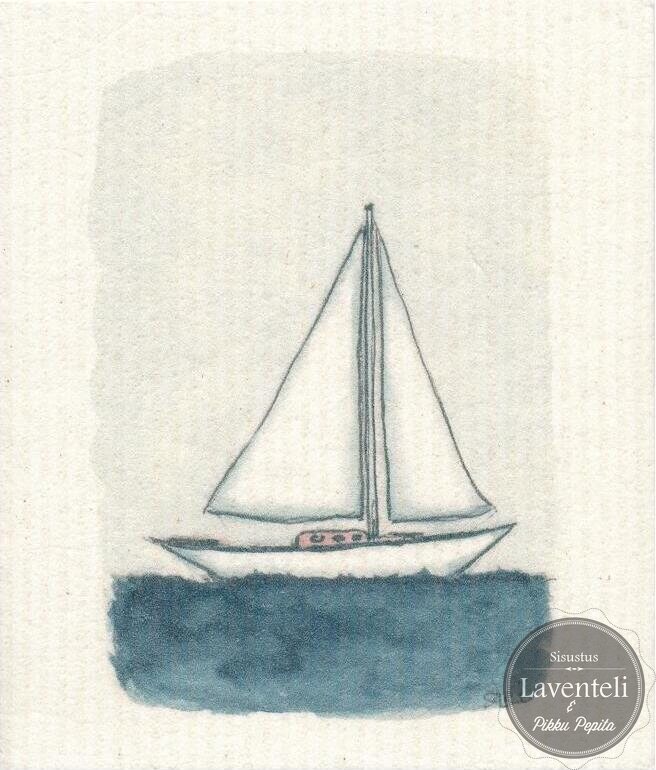
The "Purjehdus" (Sailing) dishcloth features illustrations by Sari Pohjola. The designs are printed on the cloth using eco-friendly inks and a completely water-free process. This high-quality, machine-washable dishcloth is made from Norwegian FSC-certified cellulose fiber, which is also processed within the Nordic region. The product consists of 70% cellulose complemented by cotton fiber that is no longer suitable for standard textile production and would otherwise end up burdening the planet as waste; however, it can be effectively utilized in the dishcloth manufacturing process. The production method for this 100% natural fiber material was patented back in the 1950s, and only two factories in Europe manufacture it. Sea salt is used as an auxiliary agent in the production process and is reused repeatedly.
Are you looking for a gift?
If you want to put together a gift, buy a beautiful bowl or container and fill it with the cloth along with items like
Nicolas Vahé jams, spices, and other treats. You can even create a small gift using just a large
pepper mill , attaching the cloth to its stem with a lovely bow.
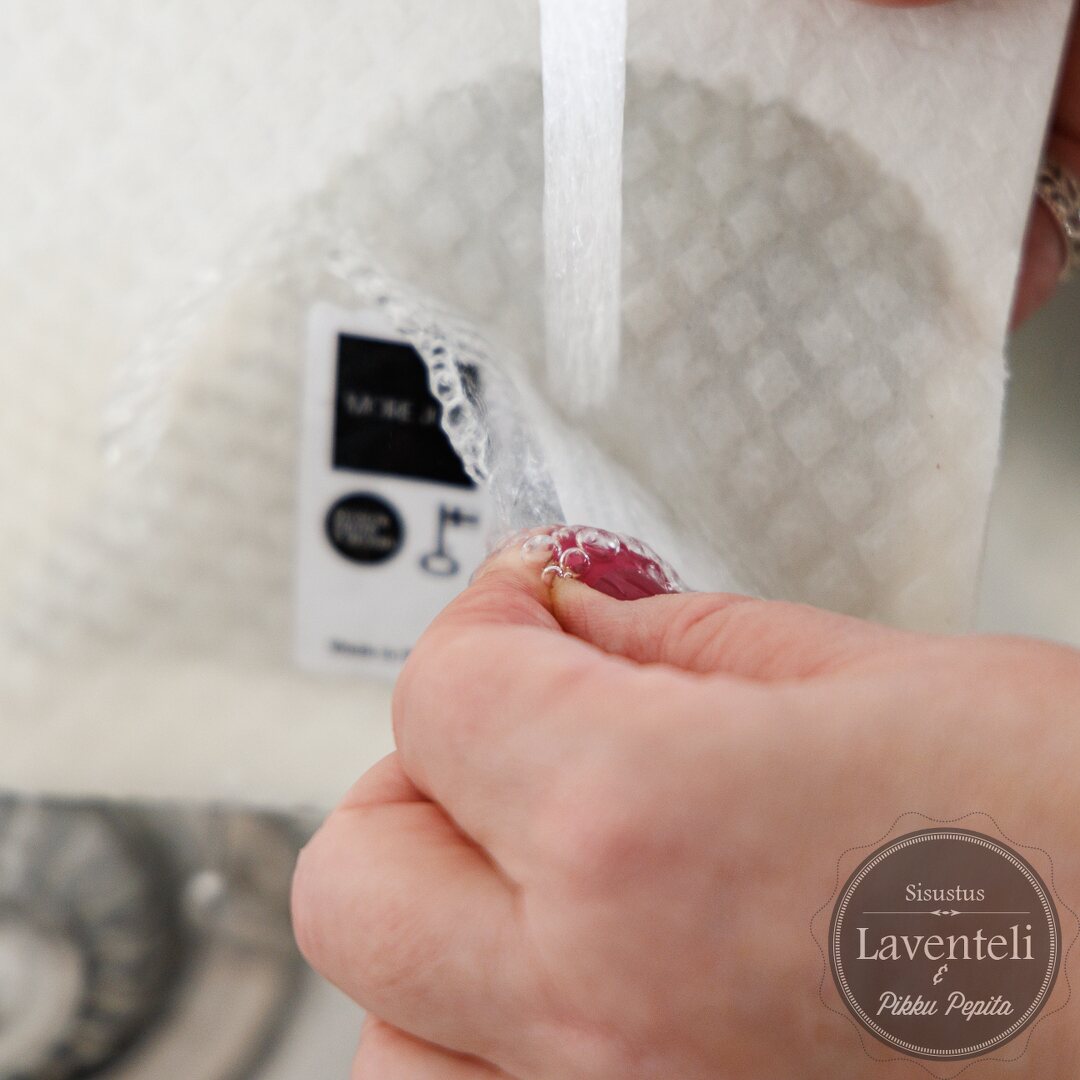
This natural-fiber kitchen cloth—or simply "dishcloth"—is a product with a long lifespan: the "Purjehdus" (Sailing) dishcloth is durable and can be washed, boiled, rinsed, and reused time and again. Finally, it can be disposed of as organic waste. The best and most eco-friendly way to wash and freshen the cloth is as follows: lay the cloth flat in the sink, sprinkle baking soda over it, add a small amount of clear white vinegar, and let it fizz. Once the fizzing stops, rinse with cool water and hang it up to dry. It will smell fresh and be ready for reuse—something boaters will appreciate. You can use the cloth for washing dishes and wiping up spills and stains, or for polishing wood surfaces, leather, and glass. The only limit is your imagination.
Further use and disposal
The best disposal tip is to wrap a damp kitchen cloth—or dishcloth—around a store-bought fresh herb growing in soil or a potted rootstock, and then replant it in a breathable pot. This way, the cloth maintains consistent moisture and supports the growth process as it decomposes. The material breaks down completely within 24 weeks; the dishcloth essentially transforms into new energy for growth. Used cloths can also be buried in a garden flowerbed to decompose. If disposing of the product in an organic waste bin, it is advisable to cut it into a few smaller pieces to speed up the decomposition process.
Dimensions 20 x 17 cm
Cellulose – Cotton
Finnish – More Joy
Machine washable
Biodegradable
Water-based pigment inks

 — Show original